What Happens If You Connect Car Battery Backwards 2026
Connecting a car battery backwards immediately sends reverse polarity through the electrical system, typically resulting in heavy sparks, smoke, and blown main fuses. While modern vehicles feature built-in protection like fusible links, severe mistakes can fry the alternator diodes, sensors, and costly engine control units (ECUs).
Connecting a car battery backwards—a critical error known as reverse polarity—sends a surge of negative current through a positive electrical system. If you made this mistake during a jump start in 2026, you likely heard a terrifying spark, saw smoke, or noticed immediate electrical failure.
The severity of the damage depends entirely on your vehicle’s age and how fast you disconnected the cables. Modern cars packed with sensitive computer modules face higher risks than older, simpler models, but safety safeguards often prevent total system destruction if you act quickly.
Key Takeaways
- Sparks, smoke, and a chemical smell are immediate warning signs of reversed polarity.
- Main fuses and fusible links act as the first line of defense against system failure.
- Alternator diodes are highly vulnerable to burning out under reverse current.
- Always disconnect the negative terminal first during any battery replacement procedure.
- Check all internal and external fuses before assuming the ECU is permanently fried.
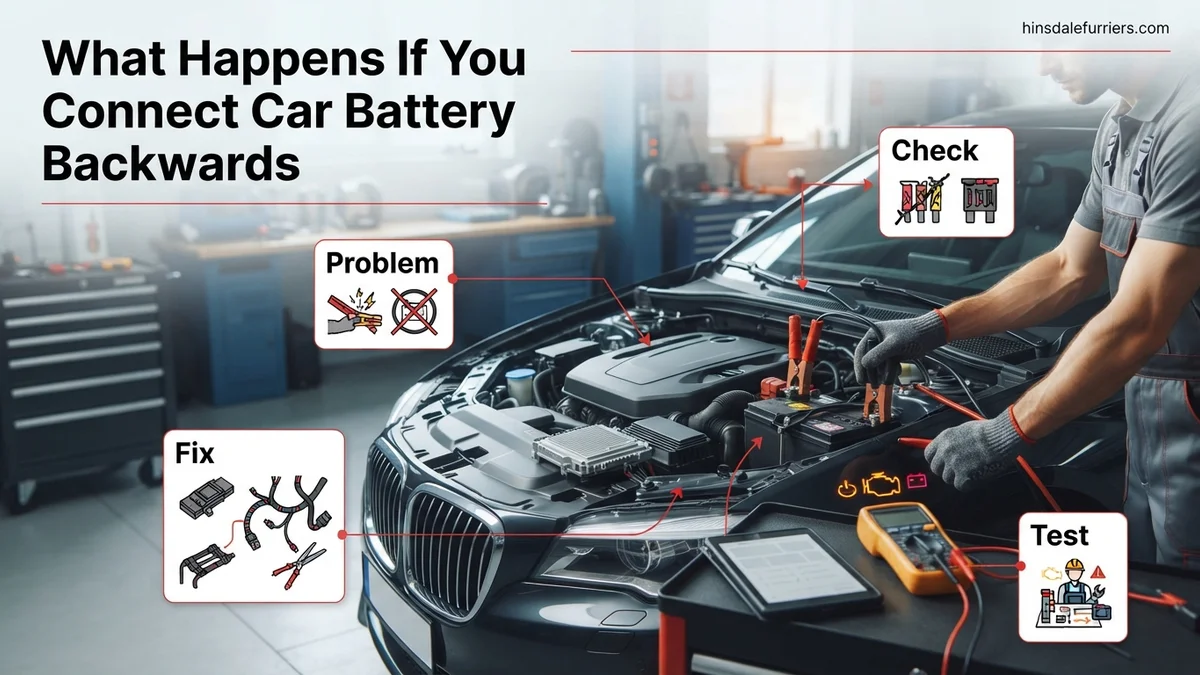
What Happens When You Reverse Car Battery Polarity
When you attach the positive jumper cable to the negative terminal and vice versa, you instantly create a short circuit. The electricity flows backward through components designed to receive power in only one direction.
The Immediate Electrical Shockwave
Within milliseconds of a reverse connection, the electrical system experiences a severe voltage spike. Here is what typically happens right away:
- Main fuses and fusible links instantly blow to protect the rest of the wiring harness.
- Sparks fly violently at the battery terminals due to the massive current draw.
- Electronic accessories left in the “on” position may suffer permanent internal component failure.
- Relays and solenoids can click, chatter, or weld themselves shut from the sudden reverse surge.
Modern Vehicles vs. Older Cars in 2026
Automotive engineering has evolved significantly by 2026. Most modern vehicles feature built-in reverse polarity protection circuits and centralized power distribution modules. If you drive a newer car, it likely sacrificed a multi-dollar high-amp master fuse to save your thousands of dollars in computer modules. Older vehicles lack these dedicated sacrificial barriers, meaning the reverse current travels freely to dashboard gauges, radios, and ignition components.
Common Damage Caused by Connecting a Battery Backwards
When reverse polarity bypasses basic safety measures, specific high-value parts are at immediate risk of failure. Knowing where the damage concentrates helps you diagnose the issue efficiently.
Fuses, Fusible Links, and Relays
Fuses are your primary line of defense. When looking for damage, check these specific areas first:
- Main Fusible Link: Usually located right off the positive battery terminal or inside the main under-hood fuse box.
- Cabin Fuse Panel: Controls internal electronics like your radio, power windows, and instrument cluster.
- Engine Control Fuses: Protect vital sensors, fuel pumps, and ignition coils.
Alternator Diodes and the ECU
If the main fuses fail to blow quickly enough, the reverse current strikes the charging system and the computer brains of your car.
- Alternator Diodes: The internal rectifier diodes allow electricity to flow only outward to charge the battery. Reverse polarity forces current backward through these diodes, causing them to overheat, short out, or melt completely.
- Engine Control Unit (ECU): Modern computer boards feature reverse-voltage protection diodes, but heavy surges can overwhelm them, frying the processor and rendering the car unable to start even with a new battery.
Step-by-Step Guide to Diagnosing and Fixing the Issue
Reversing your car battery terminals is a high-stress scenario, but methodical troubleshooting prevents further electrical damage. According to automotive service standards in 2026, working systematically safeguards sensitive onboard computers.
Initial Safety Disconnection
- Disconnect the battery immediately. Do not attempt to start the engine again.
- Wear heavy-duty rubber gloves and safety glasses to protect against residual acid or terminal sparks.
- Wait at least 10 minutes for capacitors in the electronic control modules to completely discharge.
Inspection and Fuse Replacement
- Locate the main under-hood fuse box and auxiliary cabin fuse panels.
- Inspect the main fusible link first; this heavy-duty metal strip is engineered to melt before electronics fry.
- Check secondary fuses using a digital multimeter or visual inspection for broken internal filaments.
- Replace any blown fuses strictly with exact amperage matches specified in your owner’s manual.
- Reconnect the battery correctly, ensuring positive aligns with positive and negative with negative.
What If Your Car Still Won’t Start After Replacing Fuses
If replacing blown fuses fails to restore vehicle function, deeper electrical component damage has likely occurred. Modern 2026 vehicle architectures feature complex circuitry that can bypass standard fuse protection during severe polarity reversals.
- Test the Alternator Diodes: Reverse polarity frequently destroys the internal rectifier diodes inside the alternator, causing a constant battery drain or charging failure.
- Check the Engine Control Module (ECM): High-voltage spikes can permanently fry computer logic gates, requiring professional module flashing or complete replacement.
- Inspect Fusible Links: Hidden fusible links located near the starter motor or main power distribution block may have melted internally without visual warning.
- Seek Professional Diagnostics: Transport the vehicle to a certified repair facility if dashboard warning lights remain completely dead or the starter refuses to engage. Professional diagnostic labor typically ranges from $100 to $250, while module repairs can scale from $500 to $1,500 depending on vehicle make.
Conclusion
Connecting a car battery backwards causes immediate electrical chaos, but prompt action minimizes long-term damage. Replacing blown fuses and verifying correct terminal alignment resolves most minor reverse-polarity incidents. According to verified research and expert automotive engineering sources, double-checking your cable connections before every jump-start remains the single best preventative measure. Always consult your vehicle’s service manual or contact a certified technician if electrical abnormalities persist.
❓ Frequently Asked Questions
What immediate symptoms occur when jumper cables are hooked up backward?
You will usually see severe sparking at the terminal connections, hear clicking or buzzing from relays, and potentially smell burning plastic or electronics. Electronics inside the cabin may also go completely dead.
Are modern cars protected against reverse polarity?
Most modern vehicles include main fuses, fusible links, and reverse-polarity protection circuits specifically designed to sacrifice themselves and protect sensitive computers from total destruction.
How do I test if my alternator was ruined?
Once the correct battery orientation is restored and blown fuses are replaced, use a multimeter to check battery voltage while the engine runs. If it stays below 13.5 volts, the alternator diodes are likely burned out.
Can the car battery itself be damaged by being connected backward?
Yes, internal cell damage or a reversed charge state can permanently ruin the battery, requiring a complete replacement alongside electrical repairs.
How much does it cost to fix a backwards battery mistake?
Costs range from a few dollars for replacement fuses to over $1,000 if the ECU and alternator must both be replaced due to a lack of surge protection.
What is the proper way to connect jumper cables safely?
Connect the positive (red) clamp to the positive terminal of the dead battery, then the other positive end to the live battery. Connect the negative (black) clamp to the live battery and the final negative clamp to an unpainted metal ground on the dead car’s engine block.