How Often Should Gasoline With Detergents Be Used in 2026
Gasoline with detergents (specifically Top Tier certified) is engineered for continuous use at every fill-up to prevent stubborn carbon deposits from forming on modern engine valves. While occasional use won’t instantly ruin your car, alternating tanks or relying solely on aftermarket bottle additives provides inferior long-term protection.
You do not need to buy detergent gasoline at every single fill-up to keep your engine running smoothly, but continuous use yields the best results. Top Tier certified gasoline contains specialized detergent packages that prevent carbon buildup on your fuel injectors and intake valves. If budget constraints are an issue in 2026, alternating between detergent-rich fuel and standard budget fuel will not destroy your car, but it does reduce the ongoing preventative cleaning benefits your engine receives.
Modern direct-injection engines are especially sensitive to carbon deposits because their fuel injectors sit directly in the combustion chamber. Understanding how often you should feed your car high-detergent fuel helps you balance long-term engine health with immediate fuel costs at the pump.
Key Takeaways
- Use detergent gasoline at every fill-up for optimal, uninterrupted engine cleanliness.
- Top Tier certified fuels contain higher additive doses than EPA minimum requirements.
- Direct injection engines suffer faster buildup and require high-detergent fuel constantly.
- Alternating standard and detergent gas reduces the ongoing preventive cleaning power.
- Bottled fuel additives work as periodic treatments but cost more per use.
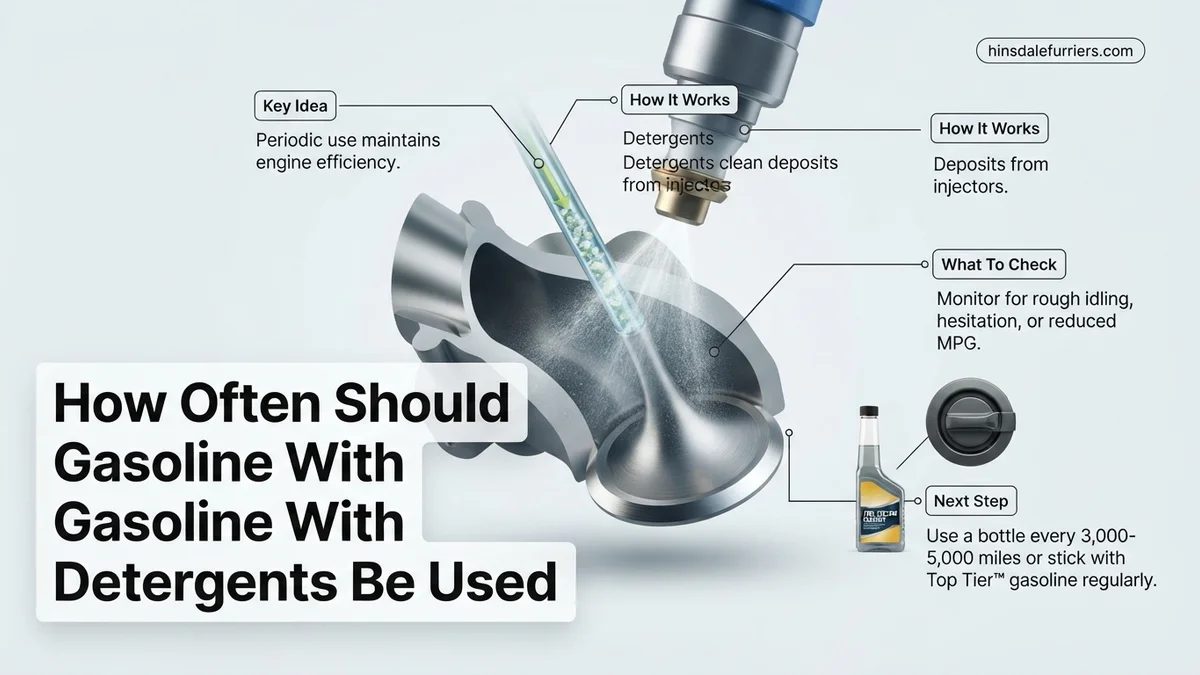
The Hidden Cost of Skipping Detergent Gasoline in Your Engine
Why Continuous Use Matters Most
Detergent gasoline is engineered to work as a continuous maintenance system rather than a sudden fix. When you fill up with Top Tier fuel every time, microscopic detergent molecules constantly sweep over your intake valves and injectors. This prevents carbon from baking onto hot metal surfaces. If you skip detergent gas frequently, varnish and carbon deposits begin to accumulate silently. By the time you notice a rough idle or lower fuel economy, the buildup is already severe.
The Real-World Impact on Direct-Injection Engines
- Spray Pattern Disruption: Carbon buildup on injector tips alters the precise mist your engine needs for efficient combustion.
- Reduced Fuel Economy: Even a minor 2 to 4 percent drop in efficiency costs you more at the pump over a year than paying for premium detergent gas.
- Emissions Testing Failures: Heavy carbon deposits can cause incomplete combustion, leading to higher hydrocarbon output during your state inspections in 2026.
Step-by-Step Guide to Establishing a Fuel Additive and Detergent Routine
Balancing Top Tier Gas and Budget Stations
If you prefer saving a few cents per gallon at non-Top Tier stations, you can successfully adopt a hybrid strategy without harming your vehicle. However, consistency remains the gold standard for engine longevity. Use this practical approach to manage your fuel routine:
- Fill up with Top Tier detergent gas for three consecutive tanks to build a baseline layer of cleanliness.
- Allow for one tank of standard budget fuel if you are trying to minimize immediate transit expenses.
- Avoid completely random mixing by tracking your fill-ups through a mobile maintenance app to ensure your engine still receives detergent protection at least 70 percent of the time.
Integrating Aftermarket Fuel Additives
Relying solely on occasional budget gas means you need a backup plan to remove stubborn deposits. Pouring a concentrated polyetheramine (PEA) based fuel injector cleaner into your tank every 3,000 to 5,000 miles bridges the gap. This heavy-duty cleaning dose mimics the active ingredients found in premium detergent gasoline, safely dissolving carbon that accumulates during your weeks using uncertified fuel.
Comparing Top Tier Gas Versus Aftermarket Bottled Fuel Cleaners
Drivers often wonder if pumping detergent-infused fuel eliminates the need for bottled fuel system cleaners. According to automotive engineering studies by groups like AAA, Top Tier gasoline meets rigorous detergent standards set by major automakers. These brands include BMW, General Motors, and Toyota. Using this fuel consistently keeps intake valves cleaner over the long term.
However, aftermarket fuel additives serve a different purpose in modern vehicle maintenance. Understanding when to use each option ensures optimal engine health throughout 2026.
When to Rely on Top Tier Gas
Top Tier fuel delivers a regulated dose of detergents with every fill-up. This continuous cleaning action prevents deposit accumulation from the start. Relying on this fuel means you do not need to purchase periodic booster bottles for routine upkeep.
When to Use Bottled Fuel Cleaners
Bottled fuel additives contain concentrated polyether amine (PEA) detergents. They provide a shock treatment for engines that already suffer from carbon fouling. Mechanics recommend using a bottled cleaner every 3,000 to 5,000 miles only if you consistently use non-certified, budget-brand gasoline.
What If It Still Doesn’t Work?
Sometimes, continuous use of detergent gasoline and fuel additives fails to resolve engine hesitation, rough idling, or reduced fuel economy. Severe carbon buildup, particularly on direct-injection engines where fuel does not wash over the intake valves, requires mechanical intervention. If deposit symptoms persist, take these steps to diagnose and correct the underlying issue:
- Inspect spark plugs and ignition coils: Worn ignition components often mimic the symptoms of fuel injector clogging. Pull the plugs to check for fouling or excessive gap wear.
- Perform a professional intake valve cleaning: For direct-injection vehicles, manual walnut-shell blasting removes stubborn carbon baked onto intake valves. Professional walnut blasting typically costs between $300 and $600 depending on labor rates.
- Test fuel injector spray patterns: If chemical cleaners fail, a technician must test individual injectors on a flow bench to verify proper atomization. Replacing a faulty fuel injector can cost from $250 to $800 including parts and labor.
- Consult a certified mechanic: When diagnostic trouble codes point to persistent misfires or lean conditions despite clean fuel systems, seek professional diagnostic assistance. Professional diagnostic fees generally range from $100 to $200.
Conclusion
Using detergent gasoline regularly is the most effective, hassle-free way to protect your engine from harmful carbon deposits. By fueling up with certified detergent blends at every visit to the pump, you eliminate the need for expensive, repetitive bottled additives. According to verified research and expert sources from automotive engineering bodies, consistent use of high-detergent fuel preserves engine efficiency and prolongs component lifespan. Make your next scheduled stop at a certified fuel station to keep your engine running clean through 2026 and beyond.
❓ Frequently Asked Questions
How often should gasoline with detergents be used for maximum engine life?
Gasoline with advanced detergents should ideally be used at every single fill-up. Continuous use prevents microscopic carbon particles from hardening into stubborn deposits on fuel injectors and intake valves.
What is the difference between EPA-mandated gas and Top Tier detergent gas?
EPA standards set a bare minimum baseline for detergent additives to prevent basic injector clogging. Top Tier certified gasoline contains two to three times that amount, actively cleaning intake valves and combustion chambers.
Can older cars get away with using cheaper, non-detergent gasoline?
Older port-injected vehicles are slightly more forgiving of standard fuel, but they will still accumulate varnish and carbon over time. Using detergent fuel periodically or sticking to Top Tier prevents rough idling and lost fuel economy.
How do bottled fuel injector cleaners compare to using detergent gas?
Bottled fuel additives deliver a concentrated shock dose of cleaning agents, which is great for a yearly tune-up. However, they cost significantly more per mile driven compared to buying pre-blended detergent fuel regularly.
Does higher octane fuel automatically mean it has more detergents?
Octane rating and detergent concentration are completely separate metrics. Regular grade gasoline can be Top Tier certified, meaning you do not need to buy expensive premium fuel just to get extra detergents.
What are the early warning signs that my engine needs more detergent fuel?
Common symptoms of carbon buildup include engine hesitation during acceleration, a rough or uneven idle, decreased fuel economy, and occasional check engine lights related to misfires.