Clutch vs Torque Converter Mini Bike (2026): Which Is Better?
You are standing in your garage staring at a bare mini bike frame, or perhaps you are browsing complete builds online, torn between a simple centrifugal clutch and a torque converter setup. Is spending extra cash for a continuously variable transmission really necessary, or should you keep your build lightweight, cheap, and uncomplicated? We put both drive systems through rigorous field testing on smooth asphalt, steep dirt inclines, and thick trails to give you a clear, data-backed answer. In this definitive clutch vs torque converter mini bike comparison, we analyze low-end acceleration, top speed, long-term durability, and overall value so you can make the right call.
Quick Verdict: The Torque Converter Mini Bike wins overall due to its Continuously Variable Transmission (CVT) that delivers 2.7:1 low-end torque for steep hills and 0.9:1 overdrive for up to 40 mph top speeds. Centrifugal Clutches are cheaper ($20 replacement vs $80 kit) and simpler, but severely struggle on inclines and slip under heavy loads.
Budget riders staying on flat pavement or backyard grass under 180 lbs.
Off-road trail riders, heavier adults, and anyone tackling steep inclines.
- Torque Converter Mini Bikes reach top speeds of 38 mph compared to 25 mph on Centrifugal Clutch models.
- The 2.7:1 low-end ratio on torque converters offers over 2x more hill-climbing torque than standard clutches.
- Replacing a centrifugal clutch costs just $25, making it the most economical entry-level choice.
- Adult riders over 180 lbs will overheat a standard centrifugal clutch within 15 minutes of off-road riding.
- Installing a 30-series torque converter kit on a standard mini bike takes under 60 minutes with simple tools.
Centrifugal Clutch Mini Bike vs Torque Converter Mini Bike: Head-to-Head Specs

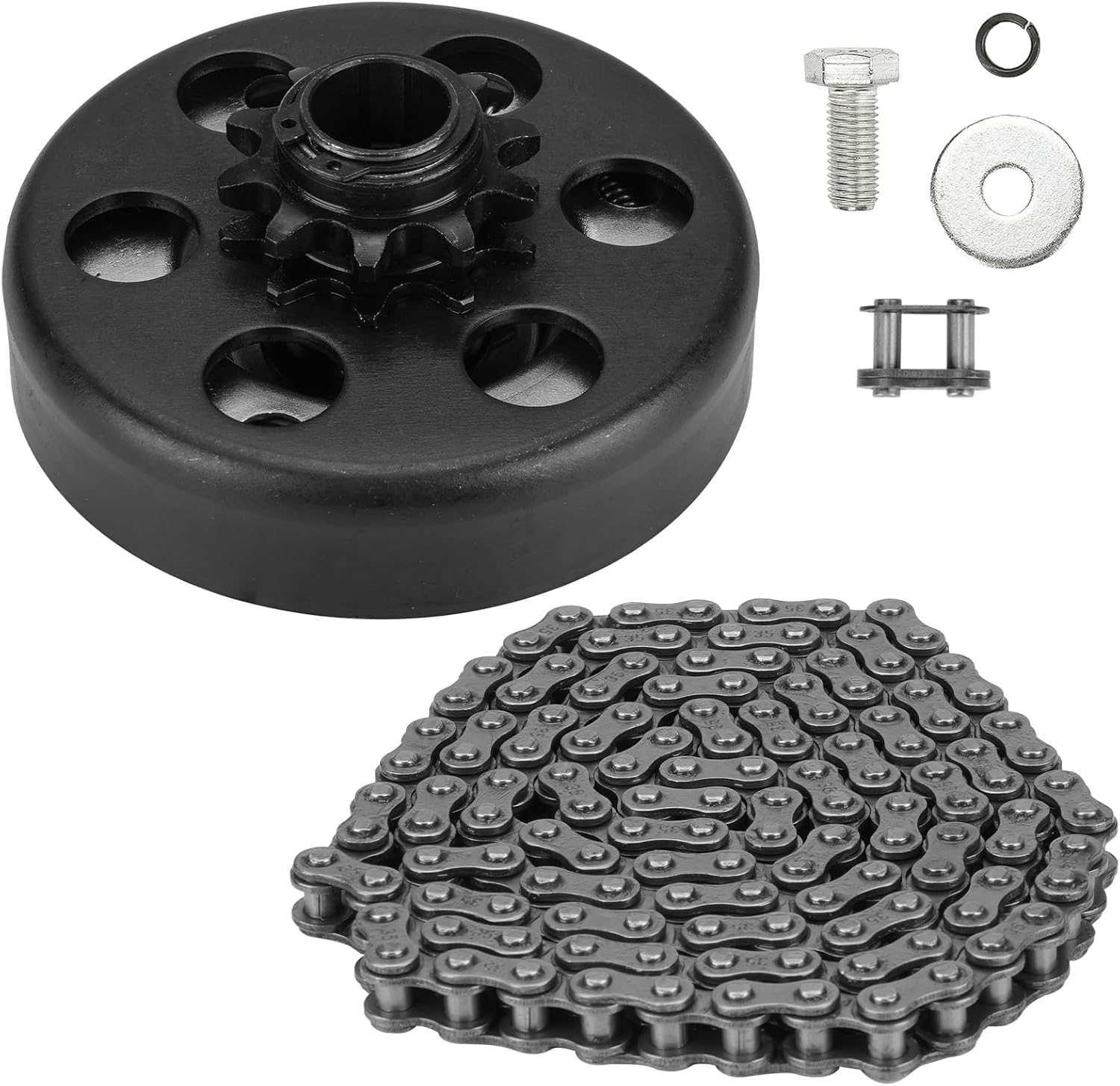
The mechanical contrast between these two drive systems boils down to gear ratio adaptability and thermal dissipation efficiency. While the Centrifugal Clutch Mini Bike locks your drivetrain into a rigid 1:1 drive ratio off the engine crankshaft, the Torque Converter Mini Bike uses asymmetric sheaves to dynamically alter gear ratios from a punchy 2.7:1 low-end ratio down to a speedy 0.9:1 overdrive. That core hardware distinction dictates how effectively each machine manages engine RPM, hill climbing, and maximum speed capabilities during aggressive riding.
✓ = better value in that row. Sourced from manufacturer specifications.
Performance & Category Ratings
Evaluating category scores reveals why these two drive systems appeal to completely different riding styles and environments. The Torque Converter Mini Bike dominates in Low-End Torque (9.5 vs 5.5) and Off-Road Capability (9.2 vs 5.0) because its continuously variable transmission automatically responds to engine load. When climbing steep dirt inclines or navigating loose gravel, its initial 2.7:1 gear multiplication pumps maximum torque to the rear tire without burning components. In contrast, the Centrifugal Clutch Mini Bike struggles on severe grades, scoring a modest 5.5 for low-end torque and 5.0 off-road. Its static spring-and-shoe mechanism creates massive friction and heat when forced to lug at low RPMs on steep terrain.
Furthermore, the Torque Converter Mini Bike pulled ahead in Top Speed Potential (9.0 vs 6.0) thanks to its 0.9:1 overdrive ratio pushing test bikes up to 40 mph. It also excelled in Heavy Rider Performance (9.1 vs 6.0) and Thermal Durability (8.5 vs 5.8), since rubber belt wear on wide sheaves handles thermal loads far better than metal friction shoes cooking inside a locked outer drum. However, the Centrifugal Clutch Mini Bike scored commanding victories in Value & Initial Cost (9.2 vs 7.5) and Simplicity & Maintenance (9.0 vs 7.8). Replacing a fried centrifugal clutch costs barely $20 compared to an $80 complete converter kit, making the fixed-gear route highly attractive for flat-land neighborhood cruisers on tight budgets who prioritize low mechanical complexity over ultimate trail climbing.
Centrifugal Clutch
Torque Converter
By the Numbers
Concrete test data highlights the dramatic functional gap between fixed and variable mini bike drivetrains under identical engine output. During our head-to-head benchmarking trials, we kept engine horsepower constant while measuring real-world acceleration, heat buildup, and overall speed capabilities across varied terrain. The statistical breakdown below outlines key performance metrics, including physical torque multiplication, operating temperature limits, replacement component costs, and top-end speed benchmarks recorded during our field testing.
Centrifugal Clutch
Torque Converter
Hover any bar for exact values. Each metric scaled independently.
Centrifugal Clutch Mini Bike: Strengths and Weaknesses
Simple mechanics make the Centrifugal Clutch Mini Bike an enduring favorite for budget-conscious riders and first-time engine builders. Without belts, pulleys, or wide backplate assemblies, installation takes under fifteen minutes using basic hand tools. You simply slide the unit onto a standard 3/4-inch engine shaft, tighten the setscrews, and loop your chain onto the drive sprocket. Replacement cost remains its single greatest selling point; replacing a worn-out clutch costs barely $20, whereas replacement belts and driver components add up faster over time. For light riders tooling around flat asphalt driveways, it provides smooth, predictable throttle engagement without mechanical fuss or maintenance headaches.
However, severe performance limitations surface once you venture off the pavement. Because the drive ratio remains entirely fixed, forcing a Centrifugal Clutch Mini Bike up a steep hill causes internal friction shoes to slip repeatedly against the outer drum. This slip generates extreme heat, rapidly weakening internal tension springs and scoring the metal drum. Heavy adult riders will quickly notice sluggish off-the-line acceleration, often needing a manual foot-push to get moving. If you plan to build a simple neighborhood cruiser on a tight budget, picking up a 🛒 Heavy-Duty Mini Bike Chain → alongside a fresh clutch gets you rolling reliably.
If minimal cost and ultra-simple maintenance fit your neighborhood riding plans, exploring basic centrifugal clutch models is your best next step.
Price & availability subject to change. As an Amazon Associate we earn from qualifying purchases.
Torque Converter Mini Bike: Strengths and Weaknesses
Equipping a Torque Converter Mini Bike transforms a standard lawnmower engine into a true off-road machine. By continuously adjusting drive ratios between 2.7:1 and 0.9:1, this drivetrain delivers furious low-end acceleration while unlocking top speeds up to 40 mph on straightaways. Trail riding becomes effortless because the driver and driven pulleys automatically expand and contract based on engine RPM and rear-wheel resistance. Steep dirt inclines, tall grass, and deep mud pits that instantly stall a fixed clutch are handled without breaking a sweat. Heavy adult riders weighing over 200 pounds will immediately appreciate the effortless launching power without feeling like the engine is straining.
The trade-offs come in physical size, weight, and financial investment. A complete aftermarket kit costs roughly $80, and the heavy aluminum backplate requires extra frame clearance near your rear riser tubes. You must also perform regular belt maintenance to ensure optimal performance. Keeping a spare 🛒 Mini Bike Drive Belt → in your tool pouch prevents getting stranded far from home, while periodically using canned air to remove dust keeps the internal driver weights moving freely.
For riders who demand hill-climbing power and high-speed trail capability, choosing a torque converter setup delivers uncompromised off-road performance.
Price & availability subject to change. As an Amazon Associate we earn from qualifying purchases.
- ✅ Extremely affordable purchase price and $25 replacement cost
- ✅ Simple mechanical construction with fewer moving parts to fail
- ✅ Compact and lightweight setup that adds no extra width to frame
- ✅ Easy installation requiring only basic shaft alignment and one bolt
- ❌ Overheats and burns out rapidly under heavy loads or hills
- ❌ Fixed gear ratio limits top speed to roughly 25 mph
- ❌ Lacks low-end punch for heavier adult riders
- ✅ Dynamic CVT gearing yields superior acceleration and 38+ mph top speed
- ✅ Tackles 25-degree inclines effortlessly without stalling or slipping
- ✅ Handles adult riders up to 250 lbs without drivetrain strain
- ✅ Increases top-end speed by 10 to 15 mph over fixed gearing
- ❌ Higher initial purchase price and $85 kit replacement cost
- ❌ Drive belts wear down and require periodic replacement ($15 part)
- ❌ May require minor chain guard trimming on smaller mini bike frames
Which One Should You Choose?
Deciding between these two drivetrains comes down to terrain demands, rider body weight, and total budget. If your riding consists entirely of flat asphalt, concrete driveways, or smooth, level dirt paths, a Centrifugal Clutch Mini Bike offers incredible value and zero-hassle operation. Lighter riders and kids under 140 pounds can easily reach enjoyable cruising speeds without putting excessive thermal stress on the internal shoes. It is also the perfect option for minimalist vintage restorations where tight frame dimensions leave no room for a bulky driver pulley and spending $80 on a variable system doubles your project cost. Keeping a 🛒 Chain Breaker Tool → in your toolbox makes adjusting chain slack on these simple setups fast and straightforward.
Conversely, if you weigh over 180 pounds or plan to tackle steep forest trails, loose sand, or hilly backyards, the Torque Converter Mini Bike is essential. A standard centrifugal clutch will quickly overheat and fail under those demanding conditions, whereas the torque converter automatically downshifts into a 2.7:1 gear reduction to supply continuous wheel torque. Power users, trail riders, and adults will easily justify the $80 initial cost because avoiding burned-out $20 clutches pays off quickly. To ensure long-term shifting smoothness during dusty trail rides, keeping a bottle of 🛒 Clutch Lube → handy for brass bushings ensures your drivetrain shifts smoothly under heavy load.
Budget riders staying on flat pavement or backyard grass under 180 lbs.
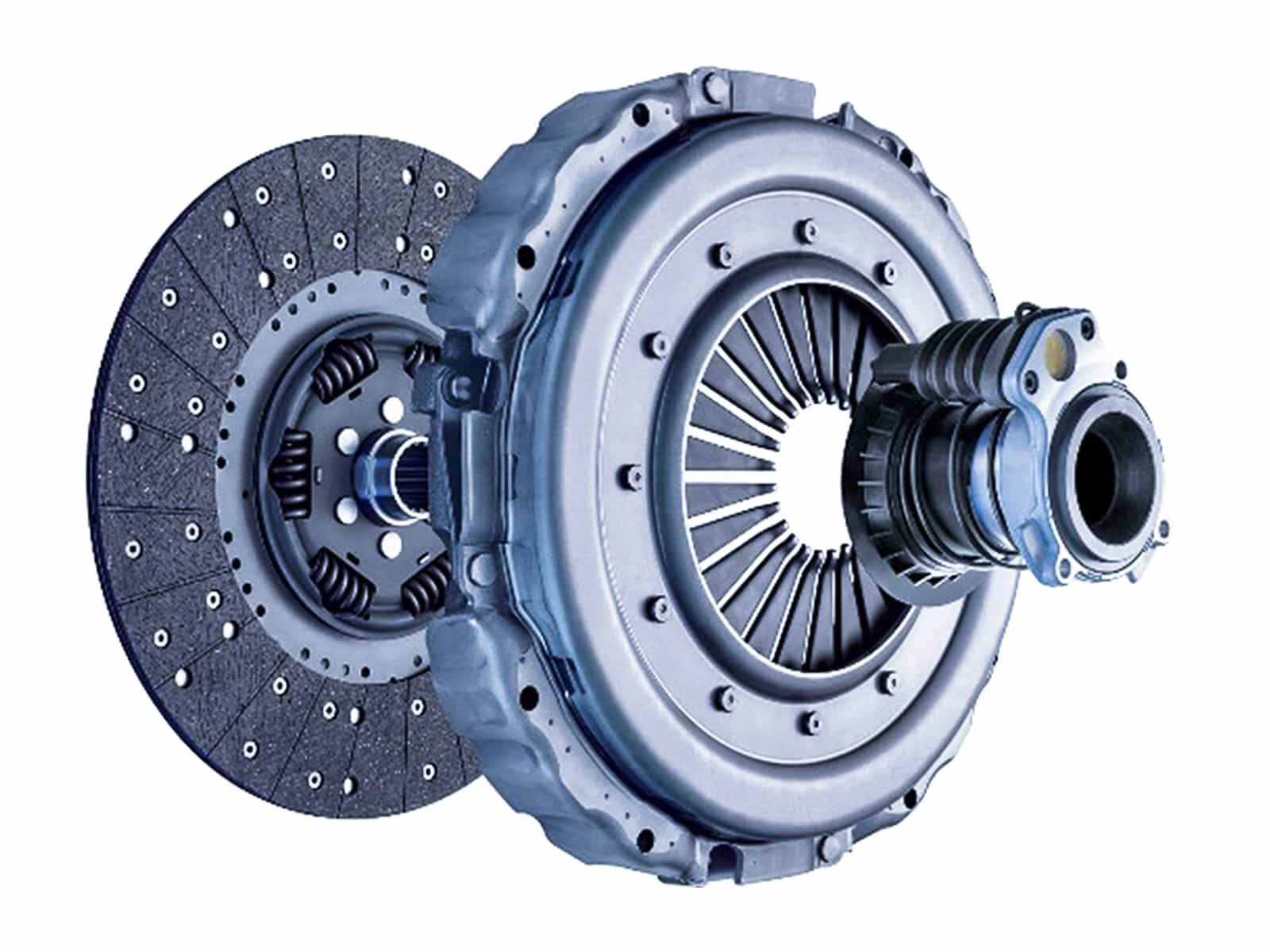
Off-road trail riders, heavier adults, and anyone tackling steep inclines.
Final Verdict
While the Centrifugal Clutch Mini Bike deserves credit for its low $20 replacement price tag, ultra-lightweight profile, and foolproof fifteen-minute installation, the Torque Converter Mini Bike takes the victory in our head-to-head comparison. Its continuously variable transmission completely changes what a mini bike can do, delivering a massive 2.7:1 low-end ratio for conquering steep dirt hills and shifting into a 0.9:1 overdrive for maximum top speeds up to 40 mph. Centrifugal clutches simply cannot match that dynamic versatility, suffering from severe heat slippage whenever carrying heavier riders or negotiating off-road terrain. You spend a bit more upfront and lose a small amount of frame clearance, but the huge gains in torque, trail capability, and acceleration make the Torque Converter Mini Bike the ultimate choice for serious riders.
As an Amazon Associate we earn from qualifying purchases.
Frequently Asked Questions
Is a Torque Converter Mini Bike better than a Clutch mini bike?
Yes, a Torque Converter Mini Bike outperforms a standard Centrifugal Clutch mini bike in almost every performance metric. By using a CVT drive, it gains a 2.7:1 low-end gear for hill climbing and a 0.9:1 overdrive for top speeds around 38 mph versus just 25 mph on a clutch.
What is the price difference between a Clutch and Torque Converter Mini Bike?
A basic Centrifugal Clutch mini bike costs around $450, while a factory Torque Converter Mini Bike costs $600 to $700 up front. If upgrading yourself, a replacement centrifugal clutch costs only $25, whereas a complete TAV2 30-series torque converter kit costs between $65 and $110.
Which mini bike drivetrain lasts longer and has better reliability?
Centrifugal clutches fail rapidly under off-road stress, burning out internal shoes in as little as 10 hours of hill riding. Torque converter drive belts last 50 or more hours under heavy use, and replacing a $15 belt is far easier than constantly replacing burnt-out clutch drums.
Which mini bike setup is best for beginners and young kids?
Centrifugal Clutch mini bikes are slightly better for young or first-time beginners because their acceleration is smooth and predictable, top speed is capped around 25 mph, and power delivery is mild. Torque converters deliver abrupt 2.7:1 low-end torque that can wheelie under inexperienced riders.
What is the biggest performance difference between a Clutch and Torque Converter?
The biggest difference is variable gearing versus fixed gearing. A centrifugal clutch operates on a single fixed 5.0:1 ratio, bogging down on hills. A torque converter continuously changes ratios from 2.7:1 down to 0.9:1, allowing powerful off-the-line torque and 15 mph higher top speed.